

For patients
When Is a Hair Transplant Needed
A hair transplant is a safe and effective way to restore hair density for both men and women. The procedure helps return a natural appearance and restore hair in different areas of the body.
A hair transplant may be necessary in the following cases:
Пересадка волосся може бути необхідною у наступних випадках:
- Hereditary alopecia – genetic hair loss is the most common cause of hair loss in both men and women.
- Injuries and scars – damage to the skin of the scalp or face (eyebrow and beard growth areas), as well as scarring of the skin, can lead to the appearance of areas without hair.
- Hormonal disorders – hair loss caused by hormonal imbalance often does not recover on its own.
Hair Transplant Methods:
FUE Method
DHI Method
Long Hair Transplant Method
FUE (Follicular Unit Extraction)
FUE is a minimally invasive hair transplantation technique that involves extracting follicular grafts from the donor area individually, without linear incisions or stitches. The grafts are removed using a special micro-instrument and then implanted into the areas where hair loss has occurred.
Advantages of the Method:
- No linear scar in the donor area (back of the head);
- Minimal discomfort during the postoperative period;
- Quick recovery after the procedure;
- The possibility of using additional donor areas when the number of grafts in the scalp donor zone is limited (beard, chest, back).
Who Is This Method Suitable For?
The FUE method is used for different stages of androgenetic alopecia, particularly stages II–IV according to the Norwood scale.
Hair transplantation using the FUE method is also applied in the following cases:
- post-traumatic and post-burn scars;
- eyebrow restoration;
- insufficient hair growth in the beard and mustache area.
DHI (Direct Hair Implantation)
Advantages of the DHI Method:
- Natural and aesthetically pleasing results with the ability to precisely recreate the natural hairline.
- The procedure can be performed either with partial hair shaving or without shaving the hair.
- Versatility of the method — suitable for hair transplantation in both men and women, as well as for restoring eyebrows, beard, sideburns, and mustache.
- No preliminary incisions in the implantation area — grafts are implanted directly using a special implanter.
- Fast tissue healing and a short recovery period
Who Is the DHI Method Suitable For?
The DHI method is recommended in the following cases:
- androgenetic alopecia in men and women;
- restoration of the hairline;
- eyebrow transplantation;
- increasing the density of the beard, sideburns, and mustache;
- small to medium areas of hair loss;
- patients who prefer to undergo the procedure without complete shaving of the hair.
Long Hair Transplant
The Long Hair Transplant method is a modern hair transplantation technique performed without shaving the patient’s hair. During the procedure, long hair grafts are used, which allows the surgeon to immediately see the direction and density of future hair growth.
This approach makes it possible to evaluate the aesthetic result immediately after the procedure and achieve a very natural appearance.
Advantages of the Long Hair Method:
- the procedure is performed without complete hair shaving;
- the aesthetic result can be evaluated immediately after the procedure;
- very natural-looking results;
- suitable for patients who prefer not to change their appearance during recovery.
Who Is This Method Suitable For?
The Long Hair Transplant method is suitable for patients who want to undergo hair transplantation without shaving their hair and maintain their usual appearance during recovery.
This method is commonly used for:
- hairline correction;
- hair transplantation in women;
- eyebrow restoration;
- transplantation in small or medium areas of hair loss.
What Should You Know Before the Procedure?
Preparation for the Procedure
How the Procedure Is Performed
Preparing for a hair transplant procedure is an important stage that helps ensure a successful outcome. Here are a few recommendations to keep in mind:
- Consultation with a Surgeon: Before the procedure, it is important to have a detailed consultation with a surgeon who will evaluate the condition of your hair and scalp. The surgeon will determine the most appropriate transplantation method and discuss your expectations with you.
- Laboratory Tests: Before the procedure, the patient may be required to undergo necessary laboratory tests to rule out possible contraindications.
These usually include general blood tests, as well as additional examinations if recommended by the doctor.
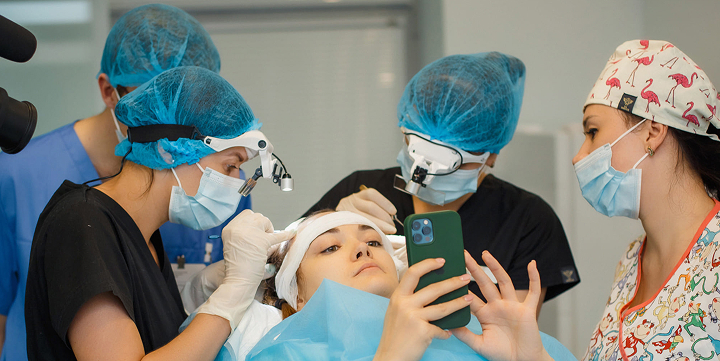
The patient arrives at the center at the scheduled time. First, all the necessary documents are signed. After that, the transplant surgeon performs the markings, identifying the areas from which the donor hair will be extracted and the areas where the grafts will be transplanted. If necessary, the hair is trimmed to the optimal length. After that, the transplantation process begins.
The Transplantation Process (Using the Seamless Method as an Example)
- Anesthesia. The doctor numbs the area from which the donor material (grafts) will be extracted.
- Graft Extraction. The doctor carefully removes grafts from the donor area.
- After extraction, the grafts are examined by a team of assistants under a microscope. Only the most viable grafts are selected to ensure successful growth of the transplanted hair.
- Lunch Break. After the first stage, the patient enjoys a lunch that we order according to their preferences.
After lunch, the procedure continues in the operating room.
- Anesthesia. The area where the grafts will be transplanted is numbed.
- Creation of Microchannels. The doctor creates microchannels in the recipient area where the grafts will later be implanted.
- Graft Implantation. Assistants carefully implant the grafts into the prepared microchannels using micro-forceps, ensuring an even distribution of hair and a natural appearance after recovery.
- Completion of the Procedure. After the hair transplantation is completed, the patient’s hair is washed and a special postoperative care kit is provided with all the necessary products for aftercare. We also give detailed recommendations on how to care for the hair after the procedure to ensure the best possible result.
We always care about the comfort of our patients and the quality of our work, so after the procedure the patient receives support throughout all stages of recovery.
Book a consultation to learn more about the hair transplantation procedure at our center.

How to Choose a Doctor
What Should You Pay Attention To?
Choosing a hair transplant specialist is a decision that affects your results for a lifetime. It is important to understand that this procedure requires not only technical skills but also the surgeon’s artistic vision, as it involves creating a natural-looking hairline.
Key Criteria:
- Membership in international professional organizations, such as IHRS. This confirms adherence to high professional standards and ethical guidelines.
- Experience and qualifications — the number of procedures performed, years of practice, and specialization in trichology and hair transplantation.
- Real results — before-and-after photos of patients, reviews, and independent recommendations.
- Transparency of the process — the doctor should clearly explain who will perform the key stages of the procedure: the surgeon or their assistants.
What Questions Should You Ask?
During the consultation, it is important not to hesitate and to ask specific questions. This will help you evaluate the doctor’s level of professionalism:
- Which hair transplantation methods do you consider optimal for my case, and why?
- What risks and possible complications exist, and how do you prevent them?
- What long-term results can I expect in my specific case?
- Will additional medical therapy be required after the transplant?
- How often do patients need additional procedures?
These questions will help you distinguish a professional doctor from someone who only promises “perfect results without risks.”
Beware of Scams!
Common Manipulations on the Internet
In recent years, the field of hair transplantation has faced a growing number of unethical practices. Online, you may often see advertisements for “quick solutions” promising thick hair in just one day without pain or recovery time. Such claims are often misleading and do not reflect the reality of medical procedures.
Manipulative tactics may include:
- Using photos from the internet that do not belong to the clinic.
- Fake reviews and “patient actors.”
- Advertising campaigns with loud promises of “100% results,” which are simply impossible in medicine.
Signs of “Bait Clinics”
There are several warning signs that potential patients should pay attention to:
- Lack of clear information about the doctor, including diplomas and certifications.
- Unusually low prices that are significantly below the market average.
- Absence of real before-and-after photos of the clinic’s own patients.
- Requests for prepayment without an official contract or guarantees.
community
IHRS Code of Ethics
To ensure maximum patient safety, IHRS has established its own Code of Ethics, which requires its members to adhere to high professional standards, provide accurate information, avoid exaggerations in advertising, and maintain full transparency throughout the treatment process.
You can read the code at the link
